

How to sleep better: Tips for deep sleep
Sleep in France: what science reveals

Sleep is much more than just a break. It is a fundamental biological process, influenced by numerous factors, and essential to our well-being. Understanding these mechanisms is the key to restorative sleep and a better quality of life. Let’s discover together the secrets of sleep and the latest scientific findings.
The French and their nights: a subject of concern
Lack of sleep is a growing concern in France. Many struggle to fall asleep and wake up exhausted. The 2023 INSV/MGEN survey reveals that 37% of French people are dissatisfied with their sleep. Women are particularly affected, with an dissatisfaction rate of 44%.
Sleep disorders are common. Insomnia affects 20% of the French population, while 17% suffer from sleep-wake rhythm disorders. To sleep better, it is essential to understand one's own needs and to regulate one's circadian rhythm. More information is available on the website of the 2023 INSV/MGEN Survey. These data highlight the importance of adopting good habits to improve one's sleep.
The influence of sleep on our days
Quality sleep directly impacts our daily performance. Insufficient or disturbed sleep is comparable to a poorly charged battery. The result is a drop in concentration, increased irritability, and a decrease in both physical and cognitive performance.
Conversely, restorative sleep allows us to be more productive and face the day with energy. A good night's rest promotes decision-making and stimulates creativity.
Sleep and biology: a complex mechanism
Our sleep is orchestrated by complex biological mechanisms, including the internal clock, which regulates our circadian rhythms. Light, physical activity, and diet influence this clock. Understanding how it works allows us to optimize our habits for more restorative sleep.
Some people seem naturally predisposed to sleep better, whether due to genetic or environmental factors. However, everyone can improve their sleep by adopting healthy lifestyle habits and creating an environment conducive to rest. Sleeping better is within everyone's reach: one simply needs to understand their biological rhythm and adopt the right practices.
Mastering nocturnal awakenings for full nights
Waking up in the middle of the night after a short period of sleep is a frustrating experience. This phenomenon, although common, impacts the quality of our rest. To regain peaceful nights, it is important to understand the causes of these awakenings and find suitable solutions.
The different types of nocturnal awakenings
Nocturnal awakenings vary. Some are short and allow us to fall back asleep quickly. Others, longer and more frequent, fragment our sleep and cause significant fatigue upon waking. These interruptions can be caused by external factors such as noise or ambient temperature. They can also be linked to internal factors such as stress, anxiety, or sleep disorders.
Age also influences sleep quality. Over time, sleep becomes lighter and nocturnal awakenings more frequent. Identifying the nature of your awakenings is essential for remedying them. If, for example, you always wake up at the same time, this may indicate an underlying problem.
Why is it difficult to fall back asleep?
Falling back asleep after a nocturnal awakening can sometimes prove difficult. The stress and anxiety generated by this difficulty aggravate the situation. The clock ticks, anxiety rises, and sleep drifts further away.
The production of cortisol, the stress hormone, increases during the night and peaks in the early morning. A nocturnal awakening disrupts this cycle and complicates falling back asleep. Relaxation techniques can then be beneficial.
Relaxation techniques for falling back asleep
Using relaxation techniques can facilitate falling back asleep. Deep breathing, for example, calms the nervous system and promotes sleepiness. Other methods like meditation or positive visualization can also be effective.
Sleep interruptions are frequent among the French. 73% of them wake up at least once per night, with awakenings that can last from 10 to 30 minutes, or even longer. Different factors can be responsible for these interruptions. Discover more information about the sleep of the French. Setting up a bedroom conducive to sleep is therefore paramount.
Adapting your bedroom for optimal sleep
Your bedroom must be a true haven of peace. An ideal temperature, total darkness, and soothing silence are essential. Limiting the use of screens before going to bed is also important to promote the production of melatonin, the sleep hormone. By optimizing your environment and practicing relaxation techniques, you can transform these nocturnal awakenings into simple pauses and reclaim full, restorative nights.
Creating your ideal sleep sanctuary

After examining the reasons for nocturnal awakenings, let's focus on the sleep environment. Transforming your bedroom into a haven of peace is essential for restorative nights. Many elements, often underestimated, can influence the quality of our sleep.
The importance of a conducive environment
Air quality, temperature, and ambient lighting are key factors. A well-ventilated room kept at an ideal temperature (around 18°C) and plunged into darkness promotes deep sleep. Don't forget to limit noise pollution as well.
The organization of your space also matters. A tidy and soothing bedroom contributes to a serene state of mind, ideal for falling asleep peacefully. For example, simply tidying up your room before going to bed can improve sleep quality.
Investing wisely to sleep better
Improving your sleep environment may require some investment. Blackout curtains, an air purifier, or new bedding can make all the difference. The quality of the bedding is paramount. 41% of the French consider the quality of their bedding as the main factor influencing their sleep, a figure that increases with age according to a 2023 Ipsos survey. To learn more about the importance of bedding.
However, it is not always essential to break the bank. Simple and economical solutions, such as earplugs or a sleep mask, can already greatly improve your nights. These accessories help create a calm and dark environment, which is valuable even in the city.
To help you choose the bedding most suited to your needs, here is a comparison table:
Criteria for choosing suitable bedding
Comparison table of different types of mattresses and their characteristics to help you choose the one that best suits your sleep needs
| Type of mattress | Firmness | Pros | Cons | Average lifespan | Ideal for |
|---|---|---|---|---|---|
| Spring | Firm to medium-firm | Good aeration, firm support | Can be noisy, less adaptable to body types | 7-10 years | People looking for firm support and good ventilation |
| Foam | Soft to firm | Adaptable to body types, silent | Can retain heat, sometimes shorter lifespan | 5-8 years | People looking for soft comfort and good value for money |
| Latex | Soft to firm | Durable, hypoallergenic, good aeration | More expensive, may be too firm for some | 10-15 years | Allergic individuals, looking for a durable and comfortable mattress |
| Memory foam | Soft | Perfectly conforms to body shapes, relieves pressure points | Can retain heat, more expensive | 8-10 years | People suffering from back pain, looking for optimal comfort |
This table summarizes the main types of mattresses and their characteristics. The ideal choice depends on your personal preferences, your body type, and your budget.
Adapting your space, regardless of budget
Whether you have a large apartment or a small bedroom, it is always possible to optimize your environment for restorative sleep. In a small space, prioritize light colors and multifunctional furniture for a feeling of space and serenity.
In a larger bedroom, you can delineate an area dedicated to sleep, distinct from the rest of the room. A room divider or a bookshelf can create this separation. The goal is to create a zone conducive to relaxation and rest. Think of your bedroom as a refuge, a space where you feel good. This arrangement, regardless of its cost, is an investment in your well-being.
Evening rituals that transform your nights
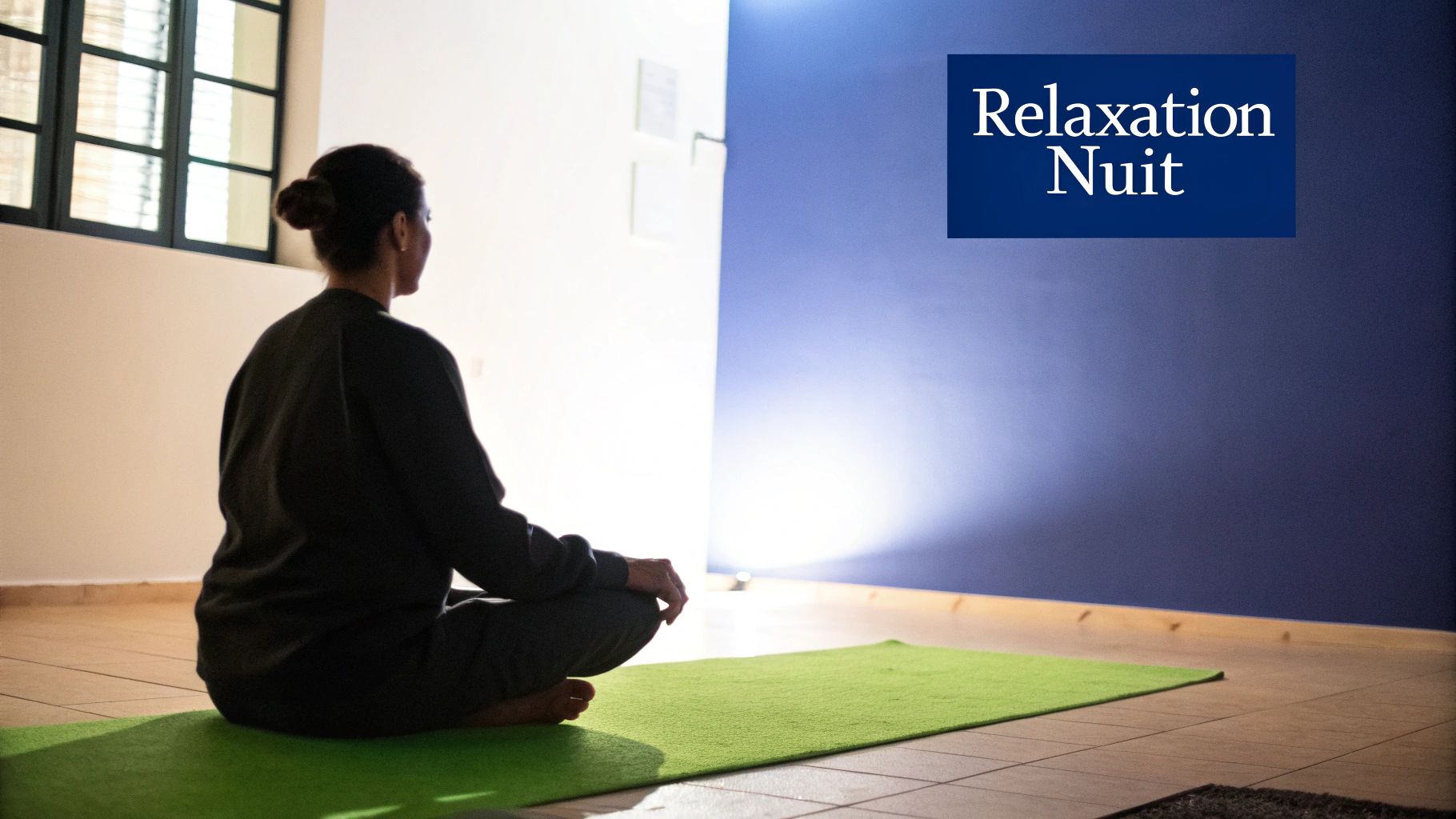
After optimizing your sleep environment, let's look at evening rituals. Setting up a personalized routine is essential for restorative sleep. Let's see how certain activities better prepare your brain for rest.
Understanding the importance of rituals
Evening rituals act as a signal to the brain, indicating that the time for rest is approaching. They promote relaxation and the production of melatonin, the sleep hormone. This regular process calms the nervous system and makes falling asleep easier.
For example, a soothing herbal tea an hour before going to bed can become an effective ritual. Combined with a relaxing activity, it prepares the body for sleep. This regularity creates a positive association between the activity and sleep.
Creating a personalized routine for better sleep
There is no universal routine. The important thing is to find what works for you. Experiment with different activities: reading, listening to soft music, meditation, or a warm bath. The goal is to identify the activities that help you relax and fall asleep.
Take reading: choosing a paper book rather than a screen is essential to avoid blue light, which is harmful to sleep. This simple choice can greatly improve the quality of your rest. Do not hesitate to test different combinations to find your ideal routine.
Examples of routines according to your profile
Adapting your routine to your lifestyle is fundamental. A busy parent will not have the same needs as a night shift worker or a stressed entrepreneur.
- Busy parents: Prioritize short and effective rituals, such as a warm shower followed by a short meditation session.
- Night shift workers: Adapt your environment for optimal sleep during the day: total darkness and limiting distractions.
- Stressed entrepreneurs: Relaxing activities like yoga or deep breathing can help manage stress and facilitate falling asleep.
These examples are not exhaustive. The essential thing is to adapt the rituals to your needs and lifestyle. The goal is to find a balance between your obligations and the need for restorative sleep.
Adapting your routine to the seasons
Our sleep needs evolve with the seasons. In winter, with longer nights, one can allow for longer and more elaborate rituals. In summer, with the heat and longer days, shorter and more refreshing routines are preferable.
For quality sleep, adaptation is key. For example, taking a warm bath in winter and a cool shower in summer are simple adaptations that make falling asleep easier. Listening to your body and adapting your habits is essential for optimal sleep all year round. In conclusion, a personalized evening ritual is a major asset for sleeping well and enjoying deep, restorative sleep.
Sleep nutrition: what your plate does to your nights
Diet plays a crucial role in the quality of our sleep. Much more than just a question of coffee, what we eat and especially when we eat it directly influences our nights. Let’s discover how to optimize our diet for restorative sleep.
Meal timing: a precious ally
Chrononutrition, which studies the impact of dietary rhythms on our health, highlights the importance of meal timing. Eating too late in the evening disrupts falling asleep and alters the quality of sleep. An active digestive system after a hearty meal makes the transition to rest more difficult.
A meal rich in fats before bed can lead to slow and difficult digestion, causing acid reflux and nocturnal awakenings. Conversely, a light dinner a few hours before bed promotes digestion and prepares the body for rest. This optimal timing allows for faster sleep onset and deeper sleep.
Essential nutrients for sleeping well
Certain nutrients are key to regulating sleep. Tryptophan, an amino acid that is a precursor to serotonin and melatonin, is essential. Poultry, eggs, nuts, and seeds are good sources.
Magnesium contributes to muscle relaxation and stress reduction, promoting sleepiness. It is found in leafy green vegetables, almonds, and dark chocolate. Incorporating these foods daily improves sleep quality.
Natural alternatives for peaceful sleep
Natural alternatives to sleeping pills exist. Certain food combinations rich in sleep-promoting nutrients can help restore peaceful nights.
A banana-almond snack an hour before bed can facilitate falling asleep. The banana, rich in tryptophan and magnesium, and the almonds, containing magnesium and protein, stabilize blood sugar during the night, thus avoiding nocturnal awakenings.
Adapting your diet to your profile
Nutritional needs vary. It is therefore important to adapt your diet to your own metabolism.
- Difficulty falling asleep: Favor foods rich in tryptophan and magnesium in the evening.
- Frequent nocturnal awakenings: Avoid refined sugars in the evening. Prioritize proteins and healthy fats to stabilize blood sugar.
- Light sleep: Ensure an adequate intake of B vitamins and iron, which are essential for restorative sleep.
To better understand the impact of diet, here is a summary table:
Impact of food on sleep quality
This table presents the effects of different foods and drinks on sleep and the best times to consume them.
| Food/Drink | Effect on sleep | Ideal consumption time | To be avoided after |
|---|---|---|---|
| Banana | Rich in tryptophan and magnesium, promotes sleepiness | 1 hour before bed | - |
| Almonds | Rich in magnesium and protein, stabilizes blood sugar | 1 hour before bed | - |
| Fat-rich meal | Slow and difficult digestion, can disrupt sleep | Lunch | 6 PM |
| Refined sugars | Rapid rise in blood sugar followed by a crash, can cause nocturnal awakenings | Morning/Lunch | 5 PM |
| Leafy green vegetables | Rich in magnesium | Lunch/Dinner | - |
This table highlights the importance of choosing the right foods and consuming them at the right time for optimal sleep. Avoiding fats and refined sugars in the evening is crucial, while foods rich in tryptophan and magnesium should be prioritized.
In conclusion, a balanced diet adapted to your rhythm, combined with a healthy lifestyle, contributes greatly to the quality of your sleep. Experimentation is the key to finding what works best for you.
Technology and sleep: the intelligent balance

It is difficult to imagine our lives without technology, even at bedtime. Yet, its influence on our sleep is undeniable. Between the positive aspects and the harmful effects, finding a balance is essential for truly restorative nights. How can this be achieved? By understanding the impact of technology on our brain and using it more consciously.
Blue light and circadian cycles: understanding the impact
The blue light emitted by our screens (smartphones, tablets, computers) disrupts the production of melatonin, the hormone that regulates our sleep. This imbalance impacts our internal clock, making it more difficult to fall asleep. Much like a conductor losing control of their orchestra, the harmony of our sleep is compromised.
The consequences on the quality of our sleep are direct: restless nights, frequent awakenings, and persistent fatigue upon waking. In the long term, a lack of sleep can lead to more serious health problems. Mastering your use of screens therefore becomes paramount. To improve your sleep and your overall well-being, discover the Câlin Calinéa, our sensory blanket with gentle compression.
Apps and devices: making the right choice
Meditation apps, white noise generators, sleep trackers... Many digital tools promise to improve our sleep. Some can be beneficial, while others risk creating dependency or aggravating sleep disorders.
Here is an overview of the advantages and disadvantages of some examples:
| Tool | Advantages | Disadvantages |
|---|---|---|
| Meditation apps | Relaxation, stress reduction | Sometimes difficult to integrate into a routine |
| White noise generators | Masks ambient noise | Risk of habituation |
| Sleep trackers | Analysis of sleep cycles | Potential for anxiety related to sleep performance |
The use of these tools should be reasoned. A sleep tracker can help identify sleep patterns, but an obsession with data can prove counterproductive and generate stress. The important thing is to find what works for you without creating a new source of anxiety.
Digital detox and intelligent integration: keys to balance
For those who are constantly connected, a gradual digital detox is recommended. Limiting screen time one to two hours before bedtime is a first step. Prioritizing relaxing activities, such as reading or a warm bath, prepares the body for rest.
It is entirely possible to intelligently integrate technology into your evening routine. Using a guided meditation app to relax before sleep can be a solution. The goal is to find a balance between using technology and preserving high-quality sleep. The key to sleeping better? Adopting a conscious and balanced approach to technology.
When to call on sleep experts
Knowing the difference between a few difficult nights and a real sleep disorder is essential. This section will help you identify often-overlooked warning signs and understand when it is time to consult a professional.
Identifying warning signs
Sleepless nights happen to everyone. However, certain signs may indicate a deeper problem that requires a specialist's opinion. If you experience intense fatigue during the day despite regular hours of sleep, it is time to ask yourself some questions. Other symptoms, such as difficulty concentrating, increased irritability, or memory problems, can also be indicators.
If your difficulties persist for more than three weeks, it is important to consult. Non-restorative sleep, even after a full night, is a major warning sign. Do not wait until these problems impact your quality of life.
The care pathway: from consultation to exams
Have you decided to consult? The first step is generally an appointment with your primary care physician. They will be able to refer you to a sleep specialist, such as a somnologist or a pulmonologist.
During the consultation, do not hesitate to ask questions about your symptoms and the various treatment options. Additional exams, such as a polysomnography (sleep study in a laboratory), may be prescribed to understand the origin of your disorders. This exam allows for the adaptation of treatment to your specific situation.
Therapeutic innovations and professional collaboration
Sleep research is constantly progressing and offering new solutions for chronic sleep disorders. Among them, Cognitive Behavioral Therapy for Insomnia (CBT-I) is an effective non-pharmacological approach. It aims to modify the thoughts and behaviors that maintain insomnia.
Collaboration with healthcare professionals is essential for successful treatment. Discuss your difficulties and expectations openly with your doctor. Regular follow-up and transparent communication are the keys to restorative sleep and a better quality of life.
Self-assessment: When should you consult?
To help you determine if a consultation is necessary, here is a short guide:
- Difficulty falling asleep more than 3 times a week?
- Frequent and long nighttime awakenings?
- Excessive daytime sleepiness?
- Negative impact on your mood, concentration, or work performance?
If you answered yes to several of these questions, it is recommended that you consult a healthcare professional.
To find soothing sleep, discover the Câlin Calinéa. This solution, based on gentle compression, reproduces the sensation of a hug to soothe the mind and promote relaxation.
