

How to fall asleep quickly: effective techniques
The silent epidemic preventing us from sleeping

Falling asleep quickly is becoming a real challenge for many people. Sleep, despite being essential to our balance, sometimes seems inaccessible. Every evening, many struggle with insomnia, staring at the ceiling with growing anxiety. But why has this difficulty in finding rest become so common?
Sleep: a public health issue
To fall asleep quickly, one must first understand the scale of the problem. Our current lifestyle, caught between constant pressure and hyper-connectivity, is contributing to a real sleep crisis. The 2023 INSV/MGEN survey reveals that 37% of the French are dissatisfied with their sleep, with a higher prevalence among women (44%). These alarming figures show the importance of taking this problem seriously.
Dissatisfaction is often linked to disorders such as insomnia (20%) and circadian rhythm disorders (17%). Improving one's sleep therefore involves better regulation of these rhythms and relaxing activities before going to bed. Learn more about the sleep habits of the French.
The consequences of disturbed sleep
The consequences of poor sleep go beyond simple fatigue. Insufficient or poor-quality sleep impacts our physical and mental health, as well as our performance. Difficulties concentrating, mood swings, irritability, and increased risks of chronic illnesses can result.
Identifying the causes to find sleep again
Understanding the reasons for your difficulty falling asleep is the first step toward a solution. Stress, anxiety, bad habits, a noisy environment, or an unsuitable diet may be to blame. Identifying your personal factors will allow you to adopt effective strategies.
Blue light from screens before bedtime, for example, disrupts the production of melatonin, the sleep hormone. Intense physical exercise right before sleeping can also delay falling asleep.
Solutions for peaceful nights
Finding restful sleep and falling asleep quickly is possible. Adopting a calming bedtime routine, creating a sleep-conducive environment, and practicing relaxation techniques can make the difference. The goal is to gradually prepare your body and mind for rest.
The real obstacles to falling asleep quickly
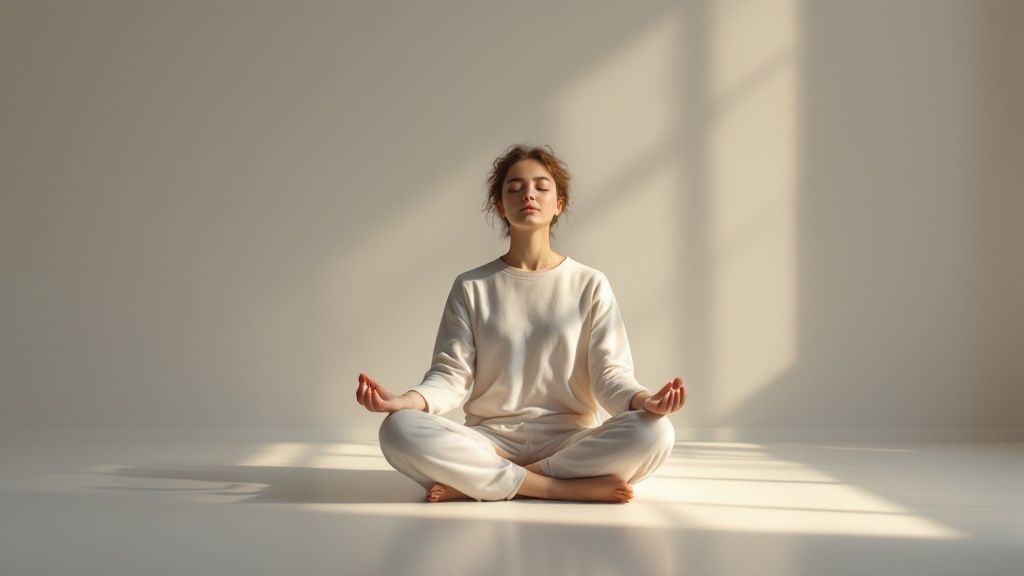
Finding sleep quickly can sometimes feel like a real challenge. Many factors, often imperceptible, can indeed disrupt our ability to fall asleep. To better understand the mechanisms of sleep and fall asleep more easily, it is important to identify these obstacles. They can generally be classified into three categories: physiological, environmental, and psychological.
Physiological disruptions
Our body needs harmony to surrender to sleep. A meal that is too rich late at night, for example, can make falling asleep difficult. Digestion consumes energy and can increase body temperature, which goes against the natural process of falling asleep. Similarly, an unsuitable ambient temperature, whether too hot or too cold, can prevent one from finding sleep. Physical discomfort then becomes a barrier.
Environmental factors
Our environment plays an essential role in the quality of our sleep. The blue light emitted by screens (smartphones, tablets, computers) inhibits the production of melatonin, the sleep hormone. Noise, whether it comes from traffic or snoring, can also disrupt falling asleep and sleep in general. These external elements stimulate our senses and keep our brain in a state of wakefulness.
The factors influencing sleep quality are numerous. According to a 2023 Ipsos survey, 63% of the French claim to sleep poorly, with 23% doing so frequently. The quality of bedding is mentioned as a determining factor for 41% of respondents. Screen exposure before sleeping is also a major disruptor: 36% of the French use a computer, tablet, or smartphone in bed. More information is available here.
Here is a table summarizing the main environmental factors disrupting sleep onset:
The main factors disrupting sleep onset
This table presents the most common factors that prevent quick sleep onset, their prevalence among the French, and their impact on sleep quality.
| Factor | Percentage of people concerned | Impact on sleep onset | Possible solutions |
|---|---|---|---|
| Blue light from screens | 36% | Inhibits melatonin production, delays sleep onset | Avoid screens 1 hour before bed, use a blue light filter |
| Ambient noise | Variable | Difficulty falling asleep, nocturnal awakenings | Earplugs, white noise machine |
| Poor bedding | 41% | Discomfort, pain, nocturnal awakenings | Choose bedding adapted to your needs |
In conclusion, the environment plays a crucial role in the quality of our sleep. Limiting noise and light disturbances, as well as investing in good bedding, are key steps for restful sleep.
Intrusive thoughts
Finally, our state of mind significantly influences our ability to fall asleep. Anxiety, stress, and mental hyperactivity are true enemies of sleep. Racing thoughts prevent the brain from relaxing and preparing for rest. Learning to calm your mind is therefore fundamental to finding sleep quickly.
Identifying your own obstacles is the first step toward better sleep. By becoming aware of these factors, it is possible to implement solutions to overcome them and regain peaceful nights. The goal is to break the vicious cycle of insomnia and promote quick and serene sleep onset.
Relaxation techniques that really work

After identifying the difficulties in falling asleep, let's explore concrete solutions. Let's forget overly general advice! Here are relaxation methods validated by specialists to help you find sleep quickly.
4-7-8 breathing: a calming technique for the nervous system
The 4-7-8 breathing technique is simple but effective. Inhale through your nose for 4 seconds, hold your breath for 7 seconds, then exhale through your mouth for 8 seconds.
This cycle, repeated several times, acts on the nervous system. It promotes relaxation and reduces stress. It is an excellent way to prepare the body and mind for sleep.
- For beginners: start with 4 cycles and gradually increase up to 8.
- For anxious individuals: focus on the sensation of air entering and leaving to soothe your mind.
Progressive muscle relaxation: discovering how to let go
Progressive muscle relaxation consists of contracting and then relaxing different muscle groups, from your feet to your face. This technique allows you to become aware of physical tensions and release them.
Relax your body to relax your mind. Physical release promotes mental calm.
- For chronic insomniacs: practice regularly, even outside of bedtime.
- Tip: associate the contraction and relaxation with a slow, deep exhalation.
Mindfulness meditation: a moment of calm for the mind
Mindfulness meditation invites you to focus on the present moment, without judgment. By focusing on your breathing, your sensations, or the sounds around you, you soothe your mind.
The incessant flow of thoughts is reduced. This state of calm promotes sleep onset.
- For people having trouble concentrating: start with guided meditations lasting a few minutes. Apps like Petit Bambou can support you.
- Variation: visualize a soothing place and let your mind escape.
These techniques, easy to integrate into your evening routine, will help you sleep better. Experiment with them! Find the one that suits you best. To optimize your sleep, discover the Calinéa Hug from Calinéa, a solution that mimics the feeling of a comforting hug to soothe the mind and promote relaxation.
Creating your foolproof bedtime ritual

Falling asleep quickly and peacefully is a desire shared by many. It is not a coincidence, but the result of careful preparation. The key lies in establishing a personalized bedtime ritual. This ritual acts as a signal for your body, announcing the imminent arrival of rest.
The components of an effective ritual
An effective bedtime ritual relies on calming and regular activities. Some are essential, such as sticking to consistent bedtimes and wake times, even on weekends. This helps regulate your biological clock. Other activities are more flexible and adaptable to your tastes: reading, a hot bath, soft music...
The important thing is to create a routine that gradually relaxes you. For example, a relaxing herbal tea followed by a moment of reading and a few breathing exercises can ideally prepare your body for sleep.
Adapting your ritual to your lifestyle
Your ritual must be realistic and fit into your daily life. Family life, changing schedules, travel... all these factors can disrupt your habits. The goal is to maintain a certain consistency, even when facing the unexpected.
When traveling, bring familiar elements of your ritual, such as a sleep mask or a book. With children, include them in your ritual: a story or a shared quiet moment can be beneficial for everyone. In France, sleep disorders are common. In 2018, 36% of the French declared they suffered from at least one sleep disorder, and only 18% were treated. Insomnia and sleep apnea are among the most widespread. To learn more about sleep disorders in France. A diagnosis and appropriate treatment are important to regain quality sleep.
Examples of personalized rituals
Here are some examples of rituals for different profiles:
- Stressed: Hot bath with relaxing essential oils, guided meditation, inspiring reading.
- Active: Gentle stretching, calm music, writing in a gratitude journal.
- Irregular schedules: Optimizing the sleep environment (darkness, silence), short naps if needed, exposure to natural light in the morning.
Integrating the Calinéa Hug from Calinéa into your ritual can also be a good idea. The soothing sensation of a hug promotes relaxation and the production of melatonin, the sleep hormone.
Consistency is the key to success. By practicing your ritual every evening, you condition your body and mind for quick and serene sleep onset. Do not hesitate to experiment and adjust your ritual to find what suits you best.
Nourishing your sleep through diet and movement
To fall asleep quickly and enjoy restful sleep, it's not enough to count sheep. Nutrition and physical activity play an essential, often overlooked role in the quality of our sleep. By understanding the links between what we eat, our physical activity, and how we sleep, we can improve our chances of falling asleep more easily.
The impact of nutrients on sleep
Certain nutrients are valuable allies for quick sleep onset. Magnesium, found in green vegetables, nuts, and seeds, contributes to muscle relaxation and the regulation of the nervous system. Tryptophan, an amino acid and precursor to melatonin (the sleep hormone), is found in protein-rich foods like turkey, chicken, and eggs. Finally, omega-3 fatty acids help reduce inflammation and improve mood, thus promoting more peaceful sleep.
Meal timing: a key to regulating your biological clock
Meal times also influence our sleep. It is important to avoid large meals late at night, as digestion can disrupt falling asleep. Favor a light dinner 2 to 3 hours before bedtime. A small, light snack before sleeping, rich in tryptophan and complex carbohydrates, like a bowl of warm milk with a banana, can promote the production of melatonin and have a calming effect.
Moving to sleep better: choosing the right physical activity
Regular physical activity is an excellent way to improve sleep quality. However, you must choose the right exercises. Intense physical activity right before bedtime can delay sleep onset. Prefer moderate exercises like walking, yoga, or tai chi at the end of the day. According to the 2024 INSV/Fondation VINCI Autoroutes survey, 33% of people who engage in physical activity at least once a week claim to have very good sleep quality. A balanced and regular diet is also important to regulate biological rhythms and prevent sleep disorders. To learn more, consult the full survey here.
Synchronizing diet and activity for optimal sleep onset
By combining a balanced diet, rich in sleep-promoting nutrients, with regular and adapted physical activity, you can create the ideal conditions for quick and serene sleep onset. The Calinéa Hug from Calinéa can complement these efforts by offering a soothing sensation of comfort, conducive to relaxation and quality sleep.
Regulating hormones and fighting inflammation
Adopting an anti-inflammatory diet, rich in fruits and vegetables, also contributes to better sleep. By reducing inflammation, you make it easier to regulate sleep hormones. Staying well-hydrated throughout the day is essential, but avoid drinking too much water right before bed to prevent nocturnal awakenings.
Tools and supplements: separating fact from marketing
Faced with an abundance of products promising peaceful nights, it is sometimes difficult to navigate. How can you fall asleep quickly without spending unnecessarily on ineffective solutions? This guide analyzes the available tools and supplements, distinguishing those based on scientific evidence from those that rely primarily on marketing.
Apps, trackers, and other technology: useful or gadgets?
Sleep apps offer varied features: soothing sounds, sleep cycle tracking, breathing exercises. Their effectiveness is variable. Some apps, based on the principles of Cognitive Behavioral Therapy for Insomnia (CBT-I), can be useful for learning to better manage thoughts and behaviors related to sleep. Others resemble entertainment tools more closely.
Some meditation apps, like Petit Bambou or Calm, offer specific programs for sleep. These meditation exercises can help calm the mind and prepare the body for rest.
Sleep tracking devices, such as smartwatches, measure sleep duration and quality. This data can be useful for identifying trends and disturbances, but its accuracy is sometimes limited. They are not a substitute for medical consultation.
Sounds, lights, and other aids: finding what soothes you
Sound therapies (white noise, relaxing music) and light aids (dawn simulators, light therapy lamps) can be beneficial for some people. White noise masks disruptive ambient noise, while light therapy helps regulate the circadian rhythm. The effectiveness of these solutions varies from one individual to another.
Natural supplements: between proven efficacy and placebo effect
Melatonin is a hormone naturally produced by the body that regulates the sleep-wake cycle. As a supplement, it can be useful in cases of jet lag or circadian rhythm disorders. It is essential to respect the recommended dosages and consult a healthcare professional before consuming it.
Certain plants, such as valerian, chamomile, and passionflower, are traditionally used for their soothing and relaxing properties. Their effects are generally mild and vary depending on the individual.
Many other supplements are marketed to promote sleep, but their efficacy is not always scientifically proven. It is important to remain vigilant regarding unrealistic promises and to prioritize solutions whose effectiveness is validated by studies.
Choosing wisely to fall asleep quickly
In order to invest in solutions adapted to your needs and avoid unnecessary expenses, here is a comparative table:
Comparison of sleep aids
This table compares the efficacy, cost, and potential side effects of various natural and technological aids for falling asleep quickly.
| Solution | Proven efficacy | Approximate cost | Response time | Usage precautions |
|---|---|---|---|---|
| Sleep apps | Variable | Free to several dozen euros | Variable | Choose an app based on CBT-I |
| Sleep trackers | For tracking, not for sleep improvement | From 50 to several hundred euros | - | Data sometimes imprecise |
| Sound therapies | Moderate | Low | Immediate | May not suit everyone |
| Light aids | Moderate | Variable | Variable | Consult a professional in case of circadian rhythm disorders |
| Melatonin | Yes, for certain disorders | About 10 euros for a box of 30 tablets | 30 to 60 minutes | Respect dosages and consult a professional |
| Plants (valerian, chamomile, passionflower) | Mild | Low | Variable | May interact with certain medications |
In summary, this table highlights the diversity of available solutions and the need to be well-informed before choosing. Some options, such as melatonin for specific disorders, have proven efficacy. Others, such as apps, depend on their design and how they are used.
The Câlin from Calinéa offers a natural alternative to medication and supplements. By mimicking the sensation of a hug, it promotes relaxation and melatonin production, thus contributing to falling asleep faster.
When to turn to a professional consultation
Falling asleep quickly, a dream for many! But sometimes, despite our efforts, nights remain restless. It is then important to know when self-management reaches its limits and it is time to seek professional help. Recognizing the warning signs can save you months, or even years, of unnecessary suffering.
Identifying warning signs
Several clues can indicate that a consultation is necessary. If your difficulties falling asleep persist for more than three weeks, impact your quality of life (intense fatigue, irritability, concentration problems), or are accompanied by other symptoms (loud snoring, breathing pauses, restless legs), it is time to act.
Frequent nighttime awakenings, difficulty falling back asleep, a feeling of non-restorative sleep, or excessive daytime sleepiness can also be signs of an underlying sleep disorder.
The path to diagnosis and treatment
The first step toward peaceful nights is often a consultation with your primary care physician. They can refer you to a sleep specialist if needed. A pulmonologist, a neurologist, or a specialized psychiatrist will be able to establish an accurate diagnosis.
This diagnosis is generally based on an interview, a questionnaire about your sleep habits, and sometimes additional examinations. Polysomnography is one of the most common tests. This sleep recording, performed in a laboratory or at home, analyzes various nocturnal physiological parameters (brain activity, breathing, eye movements, heart rate...). Actimetry (measurement of activity and rest) or the multiple sleep latency test may also be prescribed.
Different therapeutic approaches
Several solutions exist depending on the diagnosis. Cognitive Behavioral Therapy for Insomnia (CBT-I) is a non-drug approach. It aims to modify the thoughts and behaviors that maintain insomnia by learning relaxation, stress management, and sleep hygiene techniques.
Medication, under strict medical supervision, may sometimes be necessary. Hypnotics are generally prescribed for a short duration to avoid any dependence. Other medications, such as melatonin, can help regulate the circadian rhythm.
A mixed approach, combining CBT-I and medication, is often the most effective for chronic sleep disorders.
Choosing the right specialist and communicating effectively
Finding the right specialist is paramount. Inquire with your primary care physician, consult online directories, or ask for recommendations from those around you.
Clear communication with your doctor is essential. Note the frequency, intensity, and duration of your difficulties. Describe the impact of these disorders on your daily life. The more precise you are, the better the doctor can adapt the treatment.
Rediscover serene sleep with Calinéa
Sleeping better begins with a better understanding of yourself and your needs. In addition to medical follow-up, the Câlin Calinéa from Calinéa can accompany you toward serene sleep. By reproducing the sensation of a hug, it promotes relaxation and melatonin production, for faster sleep onset and more peaceful nights. Discover this natural solution for overall well-being.
